Nozzle type affects blast pattern and productivity, so guidance on the different types ensures optimum performance.
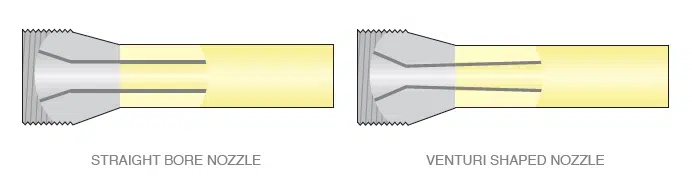
There are two main nozzle design types currently in use – the straight bore type and the venturi type – and it’s important to remember that the type and quality of the nozzle will significantly impact the performance and capabilities of abrasive blast cleaning equipment.
The straight bore nozzle, sometimes referred to as a conventional style nozzle, provides an intense, focused blast. At 100 psi (7 bar), the velocity of the abrasive leaving this type of nozzle is approximately 200 mph (321.87 kmh) that fully impacts the area of steel under treatment.
Developed in the 1960s, the venturi nozzle is a popular option, used extensively throughout the surface preparation industry to provide a more uniform impact over the entire blast pattern. Its large exit mouth allows better flow of abrasive through the nozzle by eliminating turbulence and friction, and its ‘full impact’ capabilities make this type more effective and efficient than the straight bore nozzle. At 100 psi (7 bar), the velocity of the abrasive leaving the nozzle is approximately 450 mph (724.205 km).
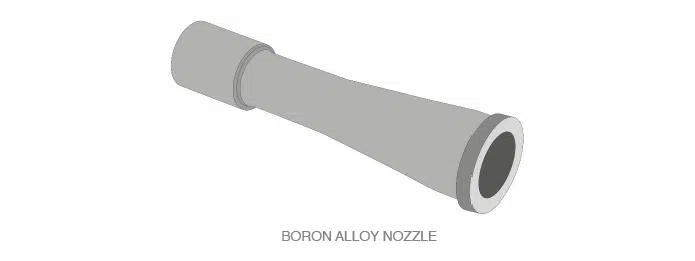
Other types include a boron alloy nozzle, which is relatively inexpensive and used extensively for site work where mechanical damage is common, and a lightweight, high-performance silicon carbide nozzle, which has an expected life usage of between 1,000 and 2,000 hours. The latter is used where long life is required when using hard-wearing abrasives, while tungsten carbide nozzles can also be deployed to meet long-term operational needs.
Various durable special nozzles, including ones with syclone liners, are available for use with tough abrasives such as aluminium oxide and silicon carbide abrasives that would wear away traditional nozzles rapidly. Curved and angled nozzles can also be used in blasting hard-to-reach places areas such as corners, flange reverse sides and pipe internal surfaces.

Whatever the application, there is a suitable nozzle for the job. However, while the supplier may offer advice on a nozzle’s life expectancy, it’s important that the abrasive blast cleaning operative understands the various types of nozzles, how to check for wear and tear, and how to minimise any damage through unnecessary impact.
This article is part of the Blasting Series available on the Corrodere App. Discover the complete series and access a wealth of training resources designed for coatings and corrosion professionals. The app also includes convenient features such as digital ID cards, certification renewal reminders, and a unique verification code system, allowing employers and clients to instantly verify qualifications. Find out more and download the Corrodere App today.