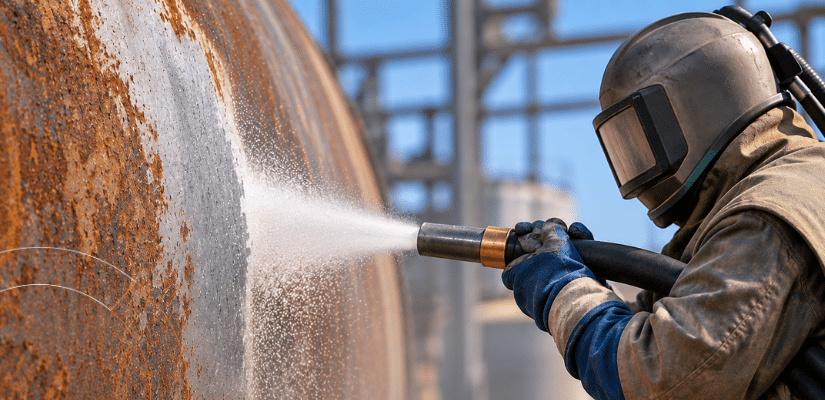
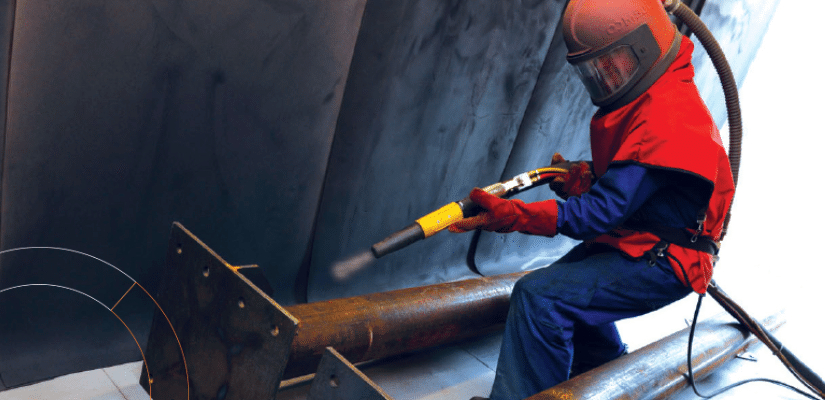
It’s important to recognise and understand the international abrasive blast cleaning standards that cover the preparation of steel substrates in readiness for protective coatings applications and other surface treatments.
Essentially, there are two key abrasive blast cleaning standards that are relevant and current: ISO 8501-1 and the SSPC/NACE joint standards. While recognising roughly the same levels of cleanliness and defining the quality of surface cleanliness on a steel surface before applying a coating system, the applicator must understand both nuances and differences. (Note: both abrasive blast cleaning standards have visual standards and text descriptions).
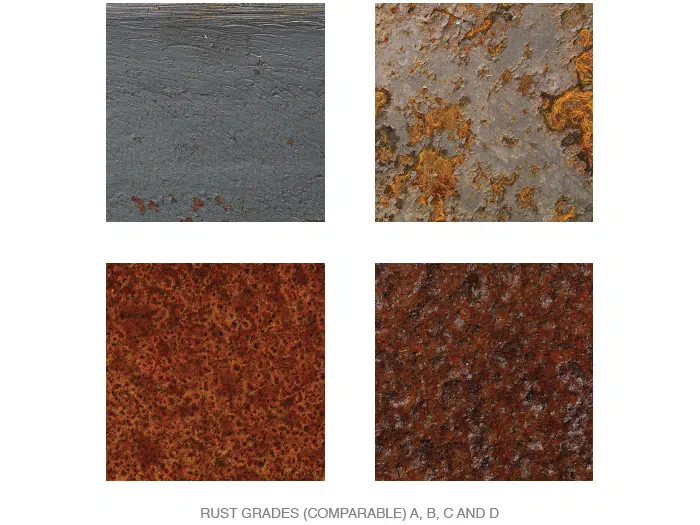
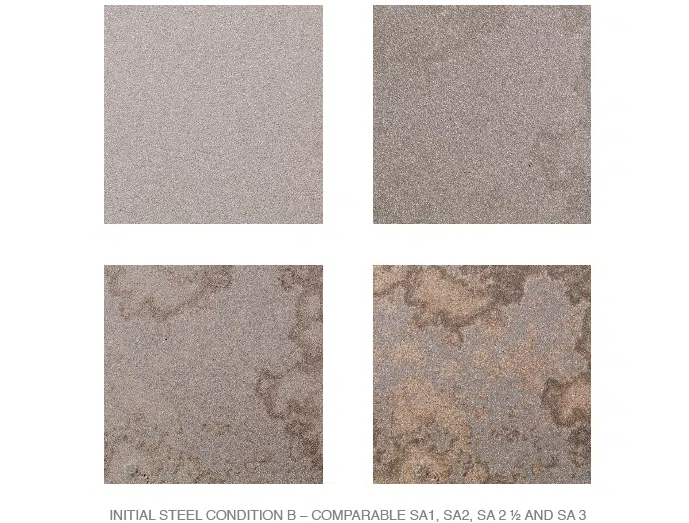
Although it contains text descriptions of the cleanliness levels, ISO 8501-1 is primarily a pictorial standard that displays the appearance of different rust grades at various cleanliness levels, ranking these in order of increasing work required. The SSPC/NACE (Society for Steel Painting Structures and National Association of Corrosion Engineers – AMPP) standards are text descriptions supported by visual guides with photo references.
Covering the preparation of steel substrates before the application of paints and related products, ISO 8501-1 specifies a series of rust grades and preparation grades of steel surfaces, indicating the method of surface preparation and the degree of cleaning.
It features the initial steel grades: A, B, C and D:
It also features the four abrasive blast cleaning standards:
- Sa 1 (Light Blast-Cleaning),
- Sa 2 (Thorough Blast Cleaning),
- Sa 2 ½ (Very Thorough Blast-Cleaning ),
- Sa 3 (Blast-Cleaning to Visually Clean Steel).
The abrasive blast cleaning requirements are designated by the letters ‘Sa’ and contain both pictorial standards and descriptive text (note that it does not define the surface profile) and include hand and power tool cleaning (St) and flame cleaning (FI).
The SSPC/NACE standards (visual guide) details four initial steel grades: A, B, C and D and five abrasive blast cleaning standards:
- SP 7/NACE No.4 – Brush-Off Blast Cleaning
- SP 14/NACE No.8 – Industrial Blast Cleaning
- SP 6/NACE No.3 – Commercial Blast Cleaning
- SP 10/NACE No.2 – Near-White Blast Cleaning
- SP 5/NACE No.1 – White Metal Blast Cleaning
It’s also important to remember throughout the abrasive cleaning process that written standards take precedence over visual ones and contain definitions, references, the procedure before blast cleaning, blast cleaning methods and operation, blast cleaning abrasives, procedures following blast cleaning and immediately prior to coating and lining, inspection, and safety and environmental requirements.
This article is part of the Blasting Series available on the Corrodere App. Discover the complete series and access a wealth of training resources designed for coatings and corrosion professionals. The app also includes convenient features such as digital ID cards, certification renewal reminders, and a unique verification code system, allowing employers and clients to instantly verify qualifications. Find out more and download the Corrodere App today.